Ocean Plastic Pollution

Our Planet Is Drowning: What UNEP's Plastic Pollution Data Means for Every Pallet Your Company Wraps
UNEP's waste hierarchy explicitly states recycling should be last resort (refuse → reduce → reuse → recycle), yet the industry invests billions in recycling stretch wrap instead of eliminating it. Canada's 2030 zero waste goal faces sabotage as companies pursue recycling-first approaches that violate the framework.
Published By:
Fortune Business Insights
The Scale We're Not Facing
We produce 300 million tonnes of plastic waste every year. That's nearly equivalent to the weight of the entire human population. But most businesses in the logistics sector don't connect that staggering number to their daily operations.
Every pallet wrapped. Every shipment secured. Every roll of stretch film consumed. It all adds up to a crisis that UNEP warns is accelerating beyond our ability to manage it.
How We Got Here: A Timeline of Acceleration
From the 1950s to the 1970s, plastic production was minimal and waste was manageable. Then something changed.
Time Period | What Happened |
|---|---|
1950s-1970s | Small-scale plastic production, waste relatively manageable |
1990s | Plastic waste generation tripled in just two decades |
Early 2000s | Waste increased more in one decade than in previous 40 years combined |
Today | 300 million tonnes of plastic waste annually |
If trends continue | By 2050, plastic industry could account for 20% of world's total oil consumption |
The acceleration is the story. We didn't gradually scale up production. We exponentially exploded it.
The Fastest Growing Material in History
Since the 1950s, plastic production has grown faster than any other material. But that growth came with a critical shift: we moved away from durable plastics toward single-use products designed to be thrown away.
More than 99% of plastics are produced from chemicals derived from oil, natural gas, and coal—all dirty, non-renewable resources.
Your stretch wrap is part of that 99%.
The Single-Use Dominance
UNEP identifies packaging as the largest generator of single-use plastic waste worldwide. Approximately 36% of all plastics produced are used in packaging.
That includes:
Stretch wrap for pallets
Protective films
Shipping materials
Containment systems
The logistics industry isn't a minor contributor to this crisis. It's one of the primary drivers.
The Recycling Lie We All Believed
Here's the number that should make every supply chain manager rethink their operations:
What Happens to Plastic Waste | Percentage |
|---|---|
Recycled | 9% |
Incinerated | 12% |
Accumulated in landfills, dumps, or natural environment | 79% |
Only 9% of all plastic waste ever produced has been recycled. Not 9% per year. 9% total. Ever.
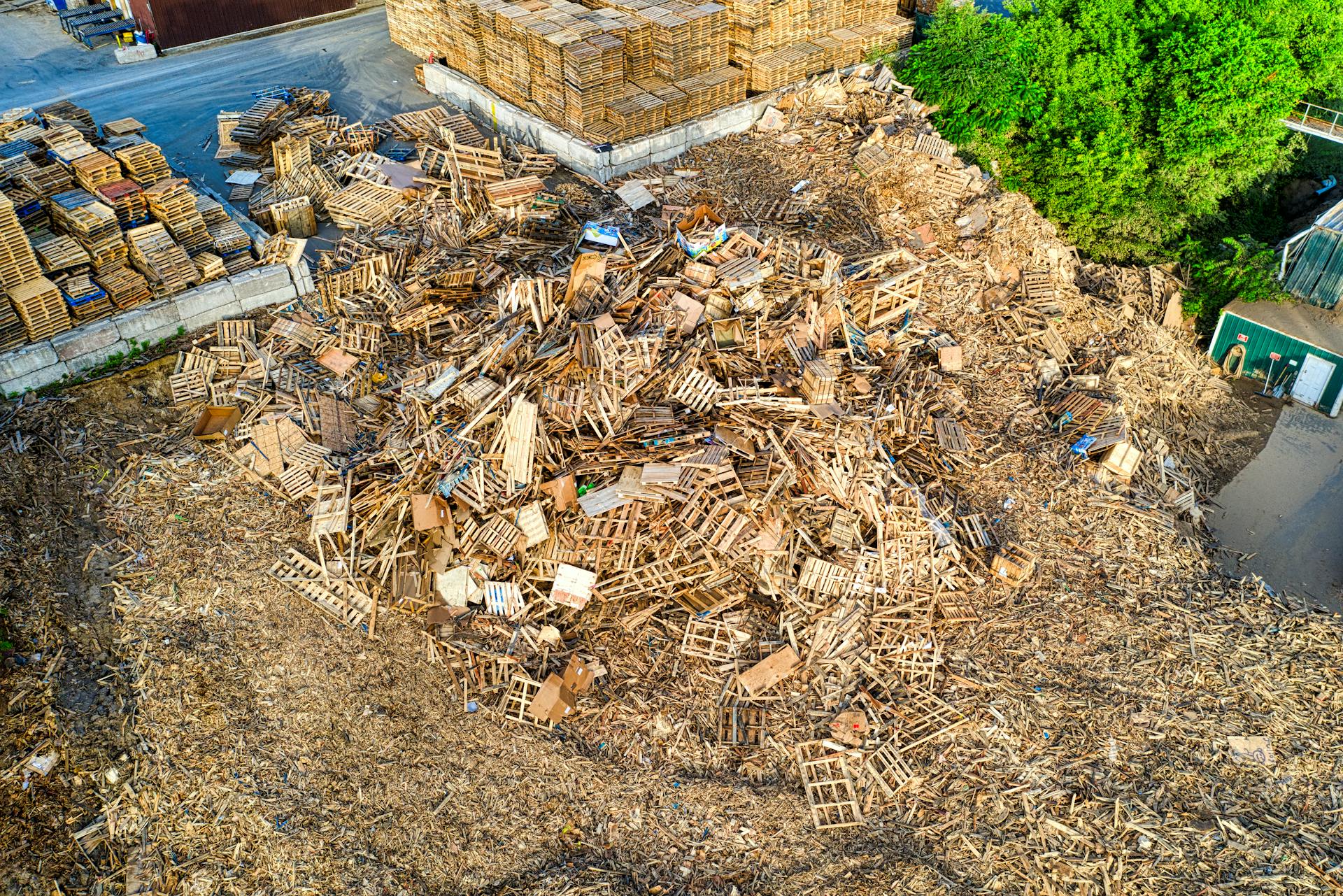
The rest? It's still here. In landfills. In oceans. In the soil. Breaking down into smaller and smaller pieces but never truly disappearing.
Where Your Stretch Wrap Actually Goes
When you cut away that stretch wrap at the destination warehouse, where does it end up?
Cigarette butts—whose filters contain tiny plastic fibers—were the most common type of plastic waste found in the environment in a recent global survey. But stretch wrap, bags, and packaging materials aren't far behind.
A staggering 8 million tonnes of plastic end up in the world's oceans every year. Much of it travels through rivers that serve as direct conduits from cities to marine environments.
Your discarded stretch wrap might start in a warehouse in Calgary. But there's a documented path for it to end up in the Pacific Ocean.
The Plastic Types in Your Supply Chain
UNEP breaks down the most common plastic types and where they show up:
Plastic Type | Common Uses | What You Use It For |
|---|---|---|
Polyethylene (LDPE) | Bags, trays, containers, food packaging film | Stretch wrap, pallet covers |
Polyethylene (HDPE) | Bottles, containers, freezer bags | Alternative pallet materials |
Polypropylene (PP) | Chip bags, bottle caps, containers | Strapping, some wrapping materials |
PET | Water bottles, dispensing containers | Beverage shipments you're wrapping |
Every one of these materials is in your supply chain. Every one contributes to the 300 million tonnes of annual waste.
The Breakdown That Never Completes
The same properties that make plastics useful in logistics—durability and resistance to degradation—make them nearly impossible for nature to break down.
Most plastic items never fully disappear. They just get smaller and smaller.
These microplastics are:
Swallowed by farm animals who mistake them for food
Consumed by fish that end up on dinner plates
Found in the majority of the world's tap water
Present in human blood, lungs, and organs
The stretch wrap you used last year? It's still breaking down. And it will be for centuries.
The Direct Path from Warehouse to Ocean
UNEP's research shows specific rivers account for the majority of plastic flowing into oceans:
Top 10 Rivers Contributing Plastic Waste:
Account for 88-95% of plastic entering oceans from rivers
Serve densely populated areas with inadequate waste management
Connect directly from industrial and commercial zones to seas
Your shipping operations likely connect to these watersheds. The plastic you use has a documented route from your facility to the ocean.
The Real Cost in Human Health
This isn't just an environmental issue. UNEP confirms the human health implications:
Microplastics enter human bodies through:
Seafood consumption (especially for coastal populations)
Drinking water (found in majority of tap water worldwide)
Common salt
Skin penetration
Air inhalation
Health impacts include:
Hormonal changes
Developmental disorders
Reproductive abnormalities
Cancer
Your employees handling stretch wrap daily? They're in direct contact with these materials. The products you ship? They're wrapped in materials that eventually contaminate food chains.
What "Progress" Actually Looks Like
UNEP notes that some governments and businesses are taking action:
Current initiatives include:
Plastic bag bans or usage fees
Encouraging reusable products (bags, bottles, containers)
Research into biodegradable materials
Supporting recycling infrastructure improvements
But here's the critical finding: despite these efforts, global plastic production and consumption continue to rise.
We're bailing water from a sinking ship while more water pours in from the top.
The Challenge UNEP Identifies
The problem requires systemic change. That means moving away from the linear plastic economy (produce → use → discard) to a circular economy.
But most "solutions" the industry proposes aren't circular. They're just less linear:
"Biodegradable" plastics that require specific conditions to break down
"Recyclable" materials that don't actually get recycled
"Sustainable" alternatives that still follow single-use models
Real circular economy means eliminating waste before it's created.
The Questions for Your Business
UNEP's data forces uncomfortable questions for every company using stretch wrap:
Financial Questions:
What happens when single-use plastics face comprehensive bans?
How exposed is your supply chain to regulatory changes?
What's the true cost including environmental externalities?
Operational Questions:
Could your warehousing operations function without single-use packaging?
What alternatives exist that don't just shift the problem?
Are you building dependency on materials facing elimination?
Strategic Questions:
How will customers view your packaging choices in 5 years?
What competitive advantage could come from eliminating plastic waste?
Are you solving problems or just making them slightly less bad?
The UNEP Beat Plastic Pollution Framework
UNEP's guidance is clear: to beat plastic pollution, we need to:
Refuse unnecessary plastics - eliminate single-use items that have reusable alternatives
Reduce plastic consumption - minimize use where alternatives exist
Reuse items - shift from disposable to durable systems
Recycle properly - though this alone won't solve the problem
Support systemic change - advocate for policies that address root causes
Notice what comes first: refuse and reduce. Not recycle. Not "sustainable alternatives."
Eliminate the need.
Where PEER Pallets Fits in UNEP's Framework
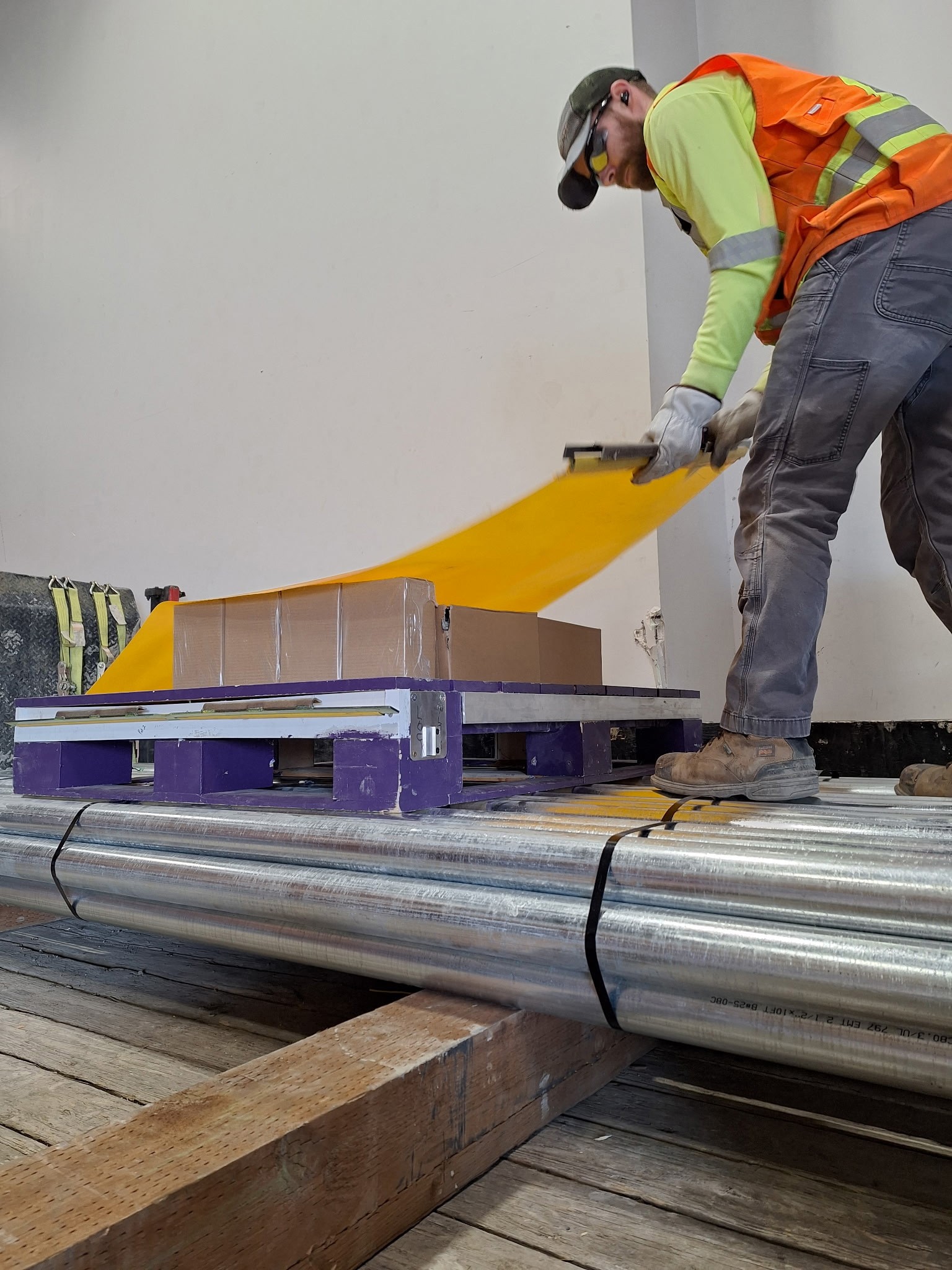
Against UNEP's findings, PEER Pallets represents the exact approach recommended:
UNEP Principle | How PEER Pallets Delivers |
|---|---|
Refuse unnecessary plastics | Eliminates need for stretch wrap entirely |
Reduce plastic consumption | Zero single-use plastic in pallet wrapping |
Reuse items | Built-in system reused indefinitely |
Proper end-of-life management | HDPE pallet recyclable after 10-year lifespan |
Systemic change | Changes the fundamental model from consumable to asset |
The 300 Million Tonne Context
Remember that number: 300 million tonnes of plastic waste annually. That's nearly the weight of the entire human population.
Now think about your operations:
How many pallets do you wrap daily?
How much stretch film do you consume monthly?
What percentage of your operational plastic becomes waste immediately?
You're not personally responsible for 300 million tonnes. But every company asking the same question "what difference does our operation make?" is collectively responsible for all of it.
The 2050 Projection That Should Terrify Logistics Managers
If current trends continue, by 2050 the plastic industry could account for 20% of the world's total oil consumption.
That's not a typo. Twenty percent.
At that scale:
Oil prices will reflect that demand
Regulations will be far more severe
Consumer tolerance for plastic packaging will be gone
Companies still using single-use materials will face existential risks
The Practical Reality
UNEP's data shows that incremental improvements haven't stopped the crisis from accelerating. Recycling more, using biodegradable alternatives, and encouraging reusable products are all happening simultaneously with increasing total plastic production.
The problem isn't that we're not trying solutions. It's that we're not trying the right solutions.
We need to eliminate waste at its source—before it's created. That means fundamentally rethinking systems built on consumption.
The Bottom Line for Your Operations
Every statistic UNEP presents traces back to business decisions:
36% of plastic production goes to packaging - your supply chain decisions
8 million tonnes enter oceans annually - your waste management choices
Only 9% ever gets recycled - your material selection
300 million tonnes of waste yearly - your operational model
You can't control the entire global system. But you control your operations.
The Question UNEP Forces You to Answer
Our planet is drowning in plastic pollution. The numbers are clear. The trends are accelerating. The consequences are documented.
Every roll of stretch wrap you purchase, every pallet you wrap, every shipment you secure with single-use plastic contributes to 300 million tonnes of annual waste that mostly never gets recycled.
The question isn't whether this system is sustainable. UNEP has answered that: it's not.
The question is whether your business will change proactively or wait until regulations, customers, or environmental reality forces the change.
A Different Approach
PEER Pallets doesn't just reduce plastic waste from pallet wrapping. We eliminate it.
Not by making stretch wrap slightly better. Not by switching to "biodegradable" alternatives that face the same end-of-life problems. Not by increasing recycling rates for materials that mostly don't get recycled.
By removing single-use plastic from the equation entirely.
That's what UNEP's framework calls for: refuse and reduce before recycle.
Ready to align with UNEP's guidance to refuse single-use plastics? Contact PEER Pallets to learn how eliminating stretch wrap puts your operations on the right side of the plastic pollution crisis.