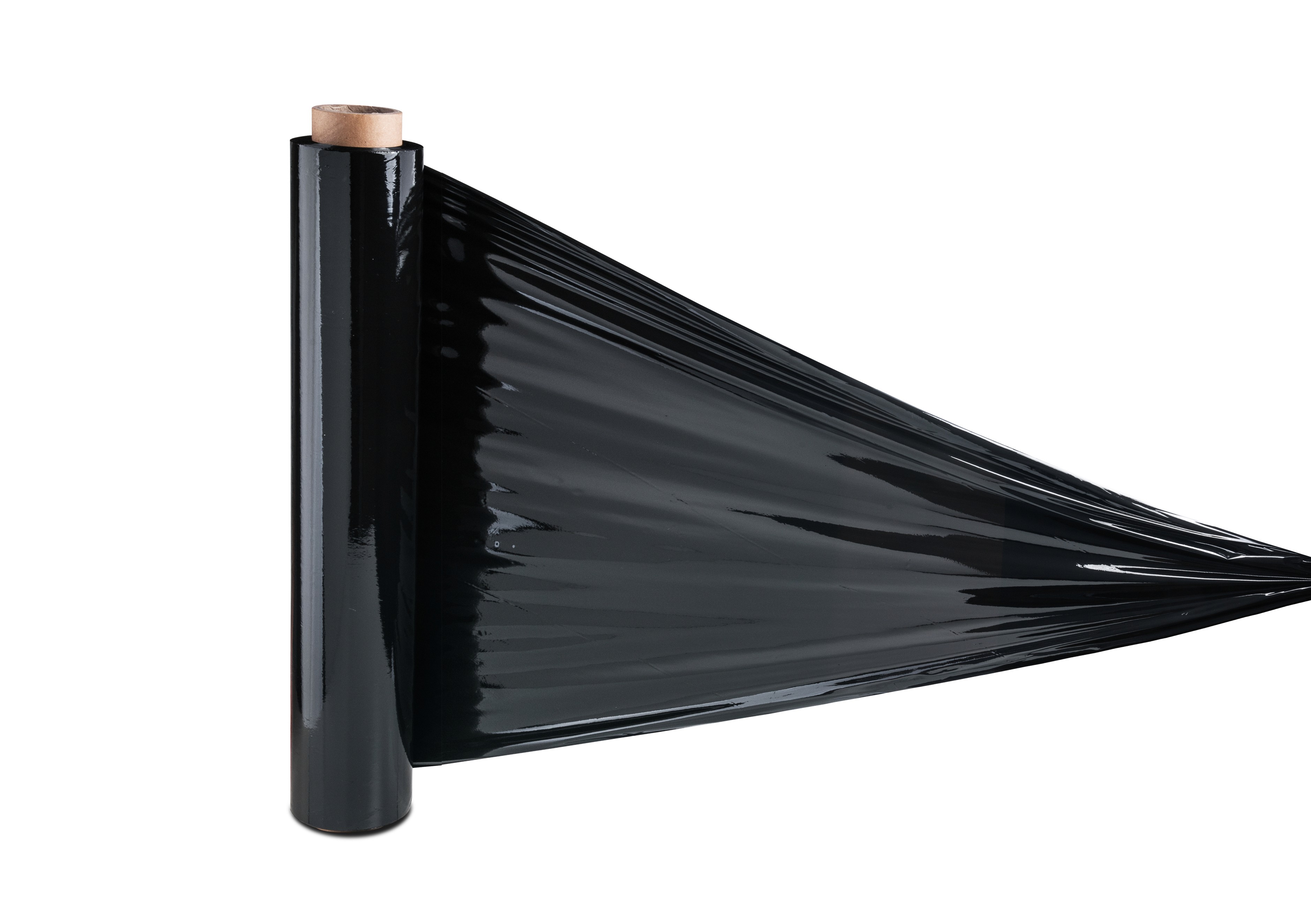
Stretch Wrap Material
Related Posts

Fortune Business Insights
Stretch Wrap Market Size
Global stretch wrap market valued at $4.68 billion in 2025, projected to reach $6.71 billion by 2032 (CAGR 5.27%)

UN Environmental Program
Global Plastic Waste
400 million metric tons of plastic waste produced annually worldwide, with only 9% recycled globally
The Hidden Complexity Behind Every Pallet: Why Stretch Film Is More Expensive Than You Think
US Packaging's guide deconstructs the industry's obsession with reducing wrap time from 120 to 80 seconds—optimizing a wasteful process rather than eliminating it. Companies invest $15,000-$100,000 in wrapping equipment plus $36,500 annually in film, all to efficiently consume disposables.
Published By:
Fortune Business Insights
It Seems So Simple
A roll of plastic film. Wrap it around a pallet. Ship your product. What could be complicated about that? Anyone who's actually managed a shipping operation knows the truth: choosing the right stretch film is a technical maze. Gauges, widths, cast versus blown, hand versus machine—dozens of variables that directly impact your bottom line and your product's safety.
The Technical Maze of Film Selection
Gauge Selection Complexity | Cast vs. Blown: The Eternal Compromise |
|---|---|
Will you use 60 gauge for loads under 1,800 lbs? 80 gauge for standard applications up to 2,400 lbs? 100 gauge for drums and steel beams up to 3,000 lbs? Choose wrong, and you're either wasting money on over-engineered film or risking product damage from tears under tension. | Cast film offers better clarity and quieter unwinding but less puncture resistance. Blown film provides superior load holding power and tear resistance but costs more and makes noise during application. Each has specific use cases. Mixing them up can compromise load security. |
Width Decisions | Pre-Stretched vs. Standard |
|---|---|
2-5" for banding
Each width serves different purposes. Use the wrong width, and you're burning through expensive film or leaving dangerous gaps in coverage. | Pre-stretched film (37 gauge equivalent) requires less physical exertion but only works for lighter loads. Standard film offers more flexibility but demands more from workers and machines. |
The Real Cost of Stretch Film
Here's what companies rarely account for when budgeting:
Small Business Costs | Details |
|---|---|
Direct Costs |
|
Equipment Costs |
|
Hidden Labor Costs |
|
Waste Management |
|
The Specialized Film Problem
Standard film isn't enough for many applications. UV-resistant film for outdoor storage adds premium costs. Industry experts note: "Anyone should consider UV stretch for any shipments stored outside longer than 60 days." Translation: Standard film fails in common conditions. You need—and must pay for—specialized solutions.
Other specialty films:
Opaque film for high-value shipments
Colored film for inventory coding
Anti-static film for electronics
Vented film for produce
Each specialized need multiplies your inventory complexity and costs.
When "Good Enough" Fails
Industry technical guides warn: "Using the wrong type of film can result in waste of materials, money, time, costly repairs, failures, and other undesirable dynamics."
What that really means: sharp edges puncture standard film, over-stretched film weakens and fails in transit, under-wrapped loads shift and collapse, temperature changes affect film performance, and humidity impacts cling properties. Every shipping decision becomes a technical calculation. Every load variation requires rethinking your film choice.
The Machine Dependency Trap
Stretch wrap machines are "recommended for any business wrapping more than 15 loads per day." That's most shipping operations.
Which means most businesses need:
Initial machine investment: $3,000-15,000+
Compatible machine-grade film
Technical training for operators
Regular maintenance and repairs
Backup equipment for downtime
Ongoing electrical costs
You're not just buying film anymore. You're locked into an entire ecosystem of equipment, training, and maintenance—all to accomplish the simple task of securing products to a pallet.
The Recycling Illusion
Technical guides carefully state: "Both shrink wrap/film and stretch film/wrap are recyclable. Check with your local recycling center, and be sure they accept soft plastics."
That careful language reveals the reality: collection costs exceed material value, contamination from labels and dirt prevents recycling, most recycling centers don't accept soft plastics, and it's cheaper to manufacture virgin plastic than recycle. The 2+ billion tons of stretch wrap produced annually? Nearly all of it becomes waste.
The Real Annual Cost
Let's be direct about what these complications actually cost. A mid-size operation wrapping 50 pallets daily:
Cost Category | Annual Amount |
|---|---|
Film alone (80-gauge @ $100/roll) | $36,500 |
Equipment (amortized over 5 years) | $600-1,400 |
Labor time (5 minutes per pallet) | $2,000-5,000 |
Waste disposal | $1,000-2,000 |
Worker injury claims | $500-1,500 |
TOTAL | $40,600-46,400 |
And that's for a modest operation. Scale that to an enterprise like Coca-Cola wrapping thousands of pallets daily, and you're looking at millions annually. Not for the product. Not for shipping. Just for temporary plastic that holds everything together.
The PEER Pallets Solution
Every technical complication—every gauge calculation, every cast versus blown decision, every specialized film requirement—becomes instantly irrelevant with PEER Pallets.
One Integrated Solution Replaces Everything
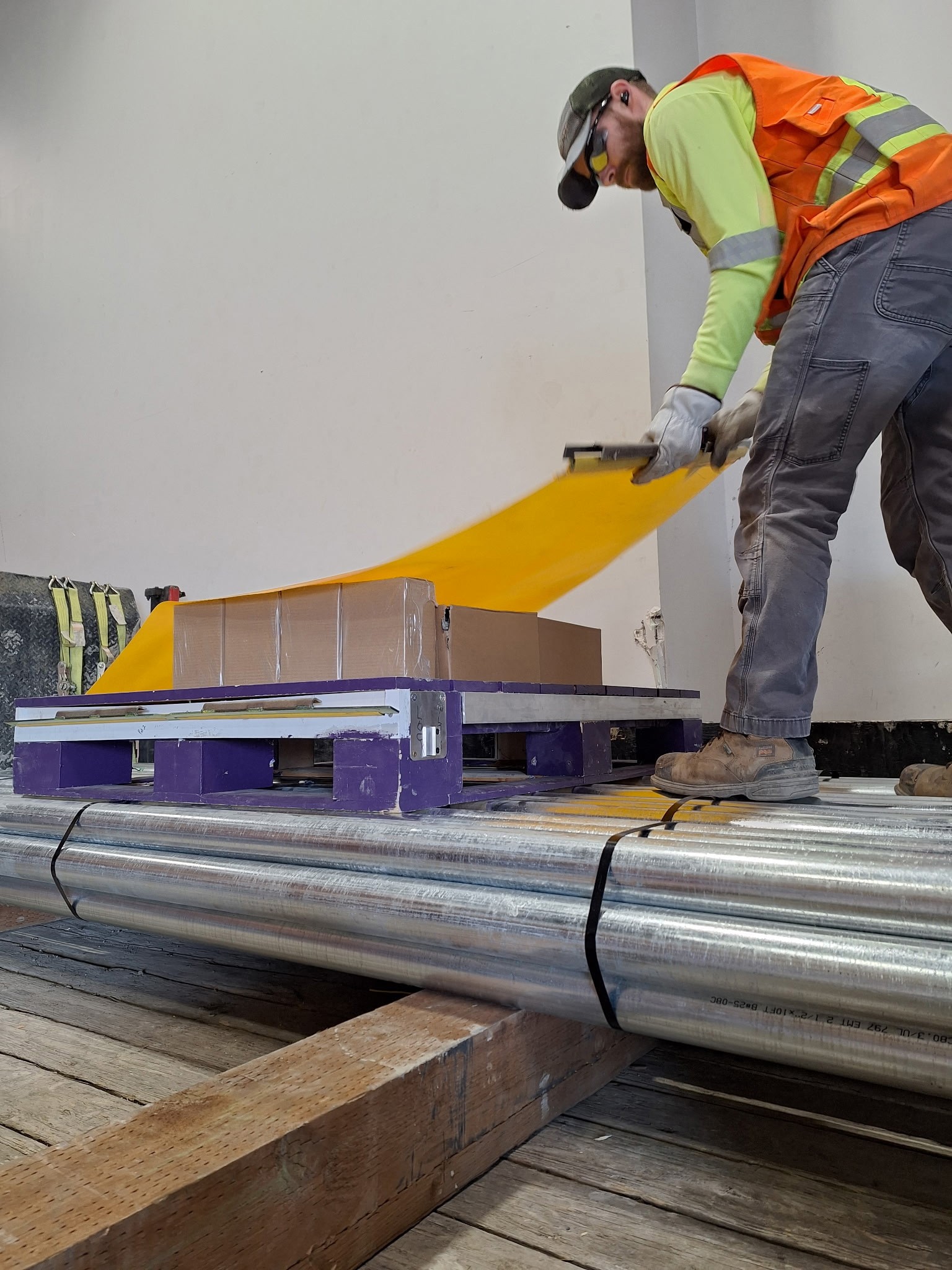
All gauges, all widths, all specialty films. No consumables means no ongoing material costs. No machines required for basic operations. No waste management needed. No technical expertise required.
Universal Performance
The system secures loads from 1mm to 8 feet high using the same built-in mechanism. Sharp edges? Not a problem—the durable fabric wrapping is designed for repeated use with all load types. Outdoor storage? The system is built into the HDPE pallet to withstand environmental conditions without degradation.
The Math That Actually Matters
Current Annual Stretch Film Costs:
$40,600-46,400
PEER Pallets Investment:
Initial cost: $250-280 per pallet
For 50 pallets in rotation: $12,500-14,000
10-year lifespan with recyclable construction
Annual amortized cost: $1,250-1,400
Net Annual Savings: $39,200-45,000
Plus additional benefits: eliminated labor time for wrapping, zero waste disposal costs, reduced WCB claims from repetitive strain, no equipment maintenance, no material price fluctuations, and compliance with coming single-use plastic bans.
The Industry's Dirty Secret
The stretch film industry has spent decades perfecting technical specifications. They've created specialized solutions for every conceivable application. They've built an entire ecosystem of equipment and expertise. And after all that engineering, all that innovation, all those specialized formulations... it's still single-use plastic that costs you money every single time you wrap a pallet.
A Simpler Question
What if the pallet itself was the solution? No technical decisions. No ongoing costs. No waste. Just a pallet that does what it's supposed to do—secure your products safely and get them where they need to go—over and over again for a decade or more.
Change Is Already Here
Technical guides confirm stretch film is recyclable—with massive caveats that essentially mean it doesn't get recycled in practice. The industry knows this. Regulators know this. And increasingly, your customers know this too. The question isn't whether the single-use stretch film model is sustainable. The question is whether your business will lead the change or be forced into it when regulations make the decision for you.
Ready to eliminate the complexity, cost, and waste of stretch film? Contact PEER Pallets to learn how one simple solution replaces an entire ecosystem of technical compromises.