Canada Regulations


October 2020: The Day Canada Declared War on Single-Use Plastics
Environment Canada's October 2020 announcement wasn't about bags and straws—it declared zero plastic waste by 2030 backed by a four-pillar framework of bans, recycled content mandates, circular economy infrastructure, and CEPA toxics designation. The six banned items capture 1% of Canada's 3M annual tonnes; stretch wrap meets every selection criterion but hides in the remaining 99%.
Published By:
Fortune Business Insights
Understanding the comprehensive plan that will reshape the shipping industry
October 7, 2020, Gatineau, Quebec
On this day, Environment Minister Jonathan Wilkinson stood before Canadians and announced something unprecedented: a comprehensive, science-backed plan to achieve zero plastic waste by 2030.
Not "reduce" plastic waste. Not "improve recycling rates." Zero plastic waste.
For most Canadians, the announcement focused on plastic bags and straws. For the shipping and logistics industry, the real story was buried in the details: a complete restructuring of how Canada manages plastic products, with explicit timelines, measurable targets, and legal mechanisms to force compliance.
The Sobering Statistics That Drove the Decision
Canadian Plastic Reality | Annual Impact |
|---|---|
Plastic waste generated | 3 million tonnes |
Percentage recycled | 9% |
Waste to landfills | Over 90% |
Plastic entering natural environment | 29,000 tonnes |
Value lost when trashed | Billions of dollars |
Think about those numbers. Canada generates 3 million tonnes of plastic waste every year. Less than one-tenth gets recycled. The rest goes to landfills or the natural environment.
That's not a recycling problem. That's a production problem.
The Science Assessment That Changed Everything
Also published on October 7, 2020: the final Science Assessment of Plastic Pollution.
Key Findings
Finding | Evidence |
|---|---|
Plastic is everywhere | Found in all environments tested |
Negative environmental impact | Documented harm to ecosystems |
Wildlife contamination | Animals ingesting and becoming entangled |
Microplastics in water | Present in water we use and drink |
Human health concerns | Potential exposure through multiple pathways |
The Science Assessment confirmed what Canadians already knew: plastic pollution isn't a future threat. It's a present crisis.
The Comprehensive Plan: Four Key Elements
The government didn't just ban a few items and call it done. They announced a complete framework for managing plastic waste.
Element 1: Ban Harmful Single-Use Items
Proposed Banned Item | Selection Criteria Met |
|---|---|
Plastic checkout bags | Found in environment, rarely recycled, alternatives available |
Straws | Found in environment, rarely recycled, alternatives available |
Stir sticks | Found in environment, rarely recycled, alternatives available |
Six-pack rings | Found in environment, rarely recycled, alternatives available |
Cutlery | Found in environment, rarely recycled, alternatives available |
Food ware from hard-to-recycle plastics | Found in environment, rarely recycled, alternatives available |
Notice the criteria: items are banned when they're found in the environment, aren't recycled, and have available alternatives.
Now ask yourself: does stretch wrap meet those criteria?
Element 2: Recycled Content Requirements
The government proposed establishing recycled content requirements in products and packaging. This means manufacturers would be forced to use recycled materials, not just virgin plastics.
Current System | Proposed System |
|---|---|
Virgin plastic is cheaper | Recycled content required by law |
No incentive to use recycled materials | Manufacturers must incorporate recycled content |
Recycling infrastructure underfunded | Investment driven by legal requirements |
Innovation focused on cheaper production | Innovation focused on recyclability |
Element 3: Circular Economy for Plastics
The government committed to a circular economy model where plastic materials stay in the economy instead of becoming waste.
Linear Economy (Current) | Circular Economy (Target) |
|---|---|
Make → Use → Dispose | Make → Use → Recover → Reuse |
Value lost at end of life | Value retained through reuse |
Constant virgin material demand | Reduced need for virgin materials |
Waste is externalized cost | Waste is design failure |
Element 4: Producer Responsibility
Perhaps most significant: the government announced plans to make producers and sellers of plastic products responsible for collecting them.
Who | Responsibility |
|---|---|
Manufacturers | Must design for recyclability |
Retailers | Must participate in collection |
Producers | Financially responsible for waste management |
Consumers | Return products to collection systems |
This fundamentally shifts the economics of single-use plastics. If you produce it, you're responsible for managing it at end of life.
The Timeline: From Announcement to Implementation
The October 2020 announcement included specific deadlines:
Date | Milestone | Status |
|---|---|---|
Oct 7, 2020 | Discussion paper published | Completed |
Dec 9, 2020 | Public consultation closed | Completed |
End of 2021 | Regulations finalized | Completed (June 2022) |
Dec 20, 2022 | Manufacturing/import ban begins | In effect |
Dec 20, 2023 | Sale ban begins | In effect |
2030 | Zero plastic waste achieved | 4 years remaining |
The government gave industry time to adapt. But they also made the timeline non-negotiable.
The Economic Opportunity
The announcement wasn't just about environmental protection. It was about economic transformation.
Projected Benefits by 2030
Benefit Category | Impact |
|---|---|
Greenhouse gas emissions reduced | 1.8 million tonnes per year |
Jobs created | Approximately 42,000 |
Revenue generated | Billions of dollars |
Innovation driven | New technologies and products |
Infrastructure investment | Recycling and recovery systems |
The government positioned this as job creation, not job destruction. Industries that innovate will thrive. Industries that resist will struggle.
The Zero Plastic Waste Initiative: Funding Innovation
Minister Wilkinson announced over $2 million through the Zero Plastic Waste Initiative for 14 Canadian-led plastic reduction initiatives.
What This Funding Supports
Project Type | Purpose |
|---|---|
Prevention solutions | Stop plastic from becoming waste |
Capture technologies | Remove plastic from environment |
Innovative alternatives | Replace single-use plastics |
Community initiatives | Local action on plastic pollution |
The government isn't just regulating. They're actively funding alternatives.
The Canada-Wide Strategy on Zero Plastic Waste
The October 2020 announcement built on existing commitments made through the Canadian Council of Ministers of the Environment (CCME).
Two-Phase Action Plan
Phase | Timeline | Focus Areas |
|---|---|---|
Phase 1 | Released earlier | Initial framework and priorities |
Phase 2 | July 2020 | Coordinated action with specific timelines |
Phase 2 Action Items
Action Area | Commitment |
|---|---|
Awareness | Improve consumer and business education |
Aquatic activities | Reduce waste from fishing and aquaculture |
Science advancement | Support research and monitoring |
Prevention and cleanup | Support pollution capture and removal |
Global action | Contribute to international efforts |
The Legal Foundation: CEPA
On October 10, 2020, the government published a proposed Order to add "plastic manufactured items" to Schedule 1 of the Canadian Environmental Protection Act, 1999 (CEPA).
Why This Matters
CEPA Tool | Application to Plastics |
|---|---|
Prevention | Address production and design |
Control | Regulate manufacture and import |
End-of-life management | Govern disposal and recycling |
Enforcement | Legal authority to act |
CEPA is one of Canada's principal laws for preventing pollution. Adding plastics to Schedule 1 gave the government broad legal authority to regulate the entire lifecycle of plastic products.
Global Context: Canada Joins Growing Movement
The announcement noted that over 35 countries had already banned certain single-use plastics.
Country/Region | Action Taken |
|---|---|
United Kingdom | Single-use plastic bans |
France | Comprehensive plastic restrictions |
Italy | Single-use plastic bans |
European Union | Directive on single-use plastics |
Many others | Various bans and restrictions |
Canada wasn't leading this movement. It was catching up.
The Personal Protective Equipment Exception
The announcement explicitly addressed COVID-19 concerns:
PPE and the Plastic Ban
Concern | Government Response |
|---|---|
Will ban affect PPE access? | No - PPE explicitly excluded |
What about PPE waste? | Working with provinces and private sector |
Priority during pandemic | Health and safety remain paramount |
The government made clear: protecting public health takes priority, but they're still working to keep PPE out of the environment.
What the Government Didn't Say
While the announcement focused on six specific items, the comprehensive plan included much broader language.
What Was Said | What It Implies |
|---|---|
"Zero plastic waste by 2030" | All single-use plastics must be addressed |
"Ban items found in environment" | Any plastic in environment is at risk |
"Producer responsibility" | All plastic producers will be accountable |
"Circular economy" | Linear use of resources must end |
The six banned items were just the beginning.
Canadian Single-Use Plastic Consumption
The announcement included specific data on consumption:
Daily and Annual Usage
Item | Consumption Rate |
|---|---|
Plastic bags | Up to 15 billion per year |
Straws | Close to 57 million per day |
Single-use plastics in freshwater | Most litter found in freshwater environments |
But notice what's missing: data on industrial plastics like stretch wrap.
Comparing Consumer vs Industrial Plastics
Category | Annual Volume | Visibility | Regulatory Status |
|---|---|---|---|
Plastic bags | 15 billion | High - consumers see them | BANNED |
Straws | 20+ billion | High - daily consumer use | BANNED |
Stretch wrap (global) | 2+ billion tonnes | Low - behind-the-scenes | NOT YET ADDRESSED |
The Consultation Process
The government invited public participation through December 9, 2020.
Topic | Public Input Sought |
|---|---|
Proposed ban items | Feedback on six categories |
Recycled content requirements | Industry capability and timelines |
Producer responsibility | Implementation mechanisms |
Alternative products | Availability and viability |
Over two months, Canadians and businesses provided feedback that shaped the final regulations.
What This Meant for Shipping and Logistics
While restaurants worried about plastic straws and grocery stores prepared for reusable bags, what should the shipping industry have been thinking?
The Warning Signs in 2020
Government Signal | Industry Implication |
|---|---|
"Zero plastic waste" | Not "less waste" - zero means all sources |
"Comprehensive plan" | Not stopping at six items |
"Producer responsibility" | All plastic producers will be accountable |
"Items found in environment" | Shipping waste enters environment |
"Circular economy" | Single-use anything is the target |
The Four-Year Window
From October 2020 announcement to 2030 zero waste goal: approximately 10 years.
From February 2026 to 2030: approximately 4 years remaining.
What's Been Accomplished
Original Timeline | Current Status |
|---|---|
6 items banned | In force |
Regulations finalized | Completed |
Implementation begun | Underway |
Plastic waste addressed | Approximately 1% |
What Remains
Challenge | Timeline |
|---|---|
Address remaining 99% of plastic waste | 4 years |
Achieve zero plastic waste | 4 years |
Transform entire plastic economy | 4 years |
The PEER Pallets Response
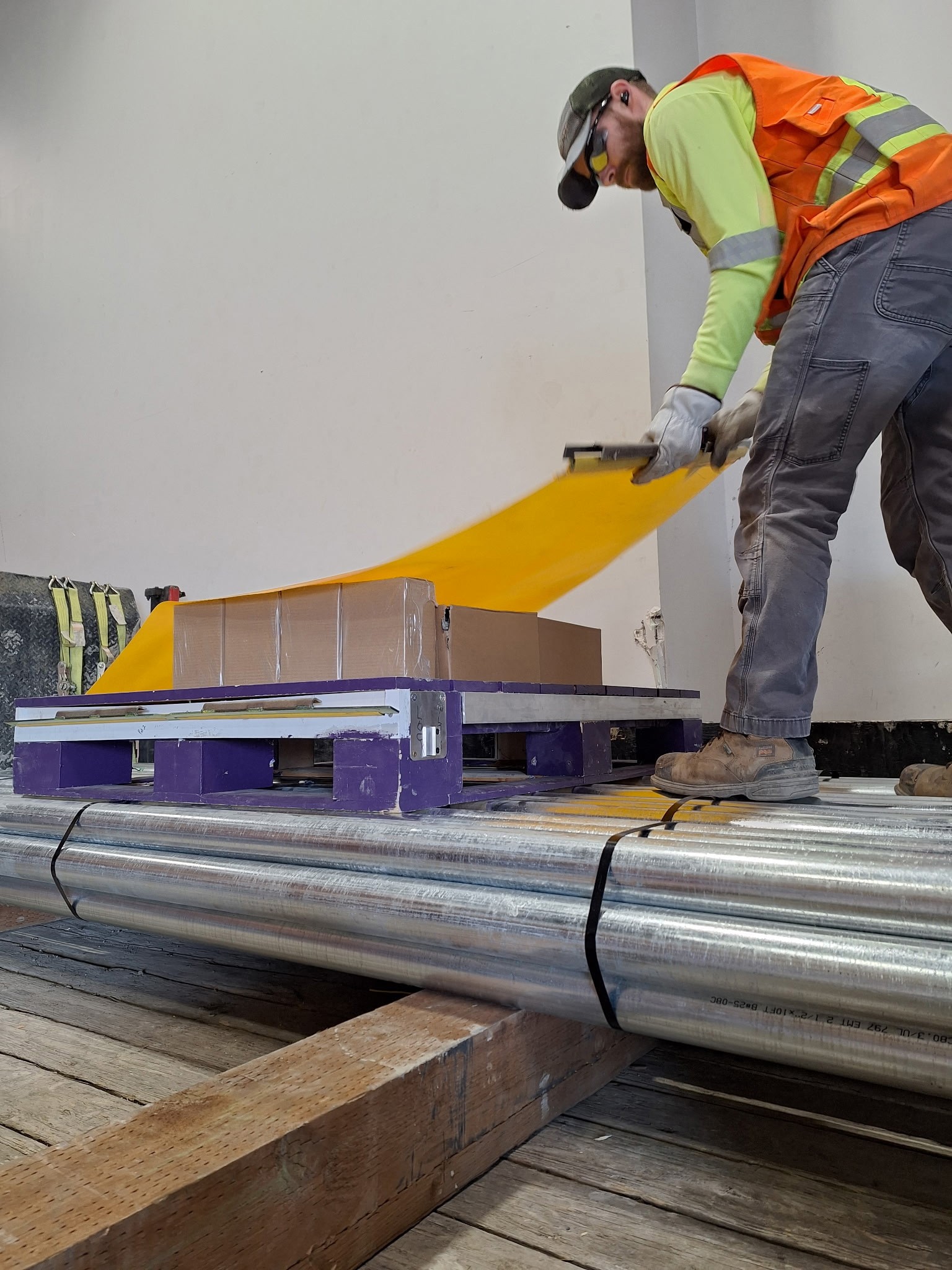
We didn't wait to see if the government would eventually target stretch wrap. We saw the October 2020 announcement and understood what "zero plastic waste" actually means.
How PEER Pallets Aligns With the 2020 Plan
Government Goal | PEER Pallets Solution |
|---|---|
Ban items found in environment | Reusable system prevents environmental contamination |
Require recycled content | No single-use plastic content to regulate |
Create circular economy | Infinite reuse - perfect circularity |
Producer responsibility | No waste to manage at end of life |
Alternatives available | Built-in reusable wrapping system |
We're not waiting for the next phase of regulations. We're already compliant with the ultimate goal.
The Questions Your Competitors Aren't Asking
In October 2020, when this plan was announced, most shipping companies asked:
"Will this affect us?"
The right question was:
"How do we prepare for zero plastic waste by 2030?"
Question in 2020 | Question in 2026 |
|---|---|
"Will they ban stretch wrap?" | "When will they ban stretch wrap?" |
"Do we need alternatives?" | "Why didn't we transition sooner?" |
"Can we afford to change?" | "Can we afford not to have changed?" |
The Bottom Line
October 7, 2020 wasn't just an announcement about plastic bags and straws. It was the government declaring their intention to completely restructure how Canada manages plastic products.
The comprehensive plan includes legal mechanisms, enforcement authority, specific timelines, and measurable targets. It's backed by science, supported by international precedent, and driven by public demand.
The six banned items represent 1% of Canada's plastic waste. The zero plastic waste goal requires addressing the remaining 99%.
Stretch wrap produces over 2 billion tonnes of single-use plastic globally each year. In Canada, 1.4 million tonnes of plastic film are produced annually, with 95.7% ending up as waste.
The October 2020 announcement gave industry a roadmap. The question is whether you're using it to prepare, or ignoring it and hoping for the best.
Sources
Environment and Climate Change Canada. "Canada one-step closer to zero plastic waste by 2030." Government of Canada, October 7, 2020.
Science Assessment of Plastic Pollution, Environment and Climate Change Canada, October 2020
Proposed Integrated Management Approach to Plastic Products to Prevent Waste and Pollution, October 2020
Canada-wide Strategy on Zero Plastic Waste, Canadian Council of Ministers of the Environment
Ready to align your operations with Canada's zero plastic waste future instead of being forced into compliance? Contact PEER Pallets to learn how our built-in reusable wrapping system eliminates single-use plastics while improving your bottom line.